Zwei Nächte am Affenkopf
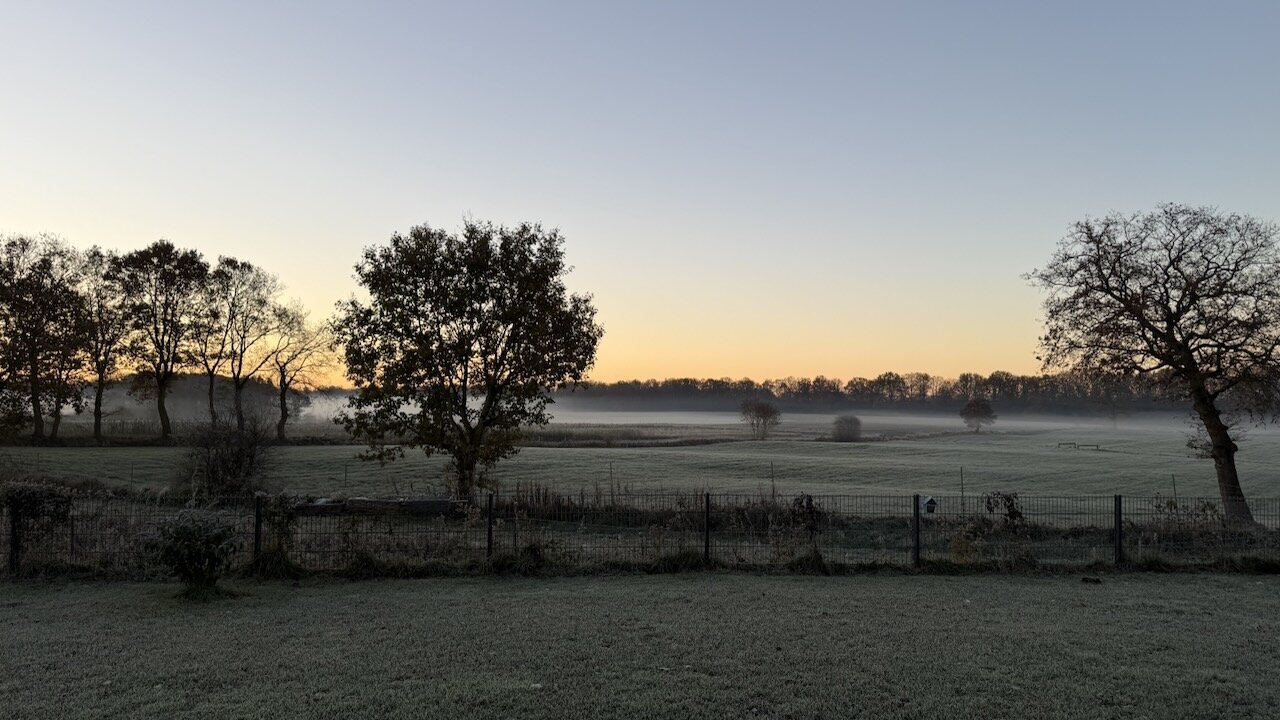
Am Sonntagmorgen lag Reif auf dem Rasen, über den Wiesen hinter dem Garten hing Nebel, und am Himmel war keine einzige Wolke. Solche Tage gibt es hier im November nicht oft. Die Nacht danach blieb klar, die nächste auch.
Fast Vollmond
Einen Haken hatte die Sache: den Mond. In der ersten Nacht war er zu 96 Prozent beleuchtet, in der zweiten zu 99 Prozent. Heute Nachmittag um 15:53 Uhr ist Vollmond, und zwar ein Supermond. Der Mond steht dabei der Erde besonders nah und ist entsprechend hell. Für Galaxien oder schwache Staubwolken kann man solche Nächte vergessen.
Bei Emissionsnebeln geht es trotzdem. Sie leuchten nur in wenigen, ganz bestimmten Farben: Wasserstoff (Hα) tiefrot, Schwefel (S II) ebenfalls rot, Sauerstoff (O III) blaugrün. Mondlicht ist dagegen reflektiertes Sonnenlicht und verteilt sich über alle Farben. Schmalbandfilter lassen nur diese wenigen Linien durch. Vom Nebel kommt fast alles an, vom Mond nur ein kleiner Rest.
Der Affenkopf
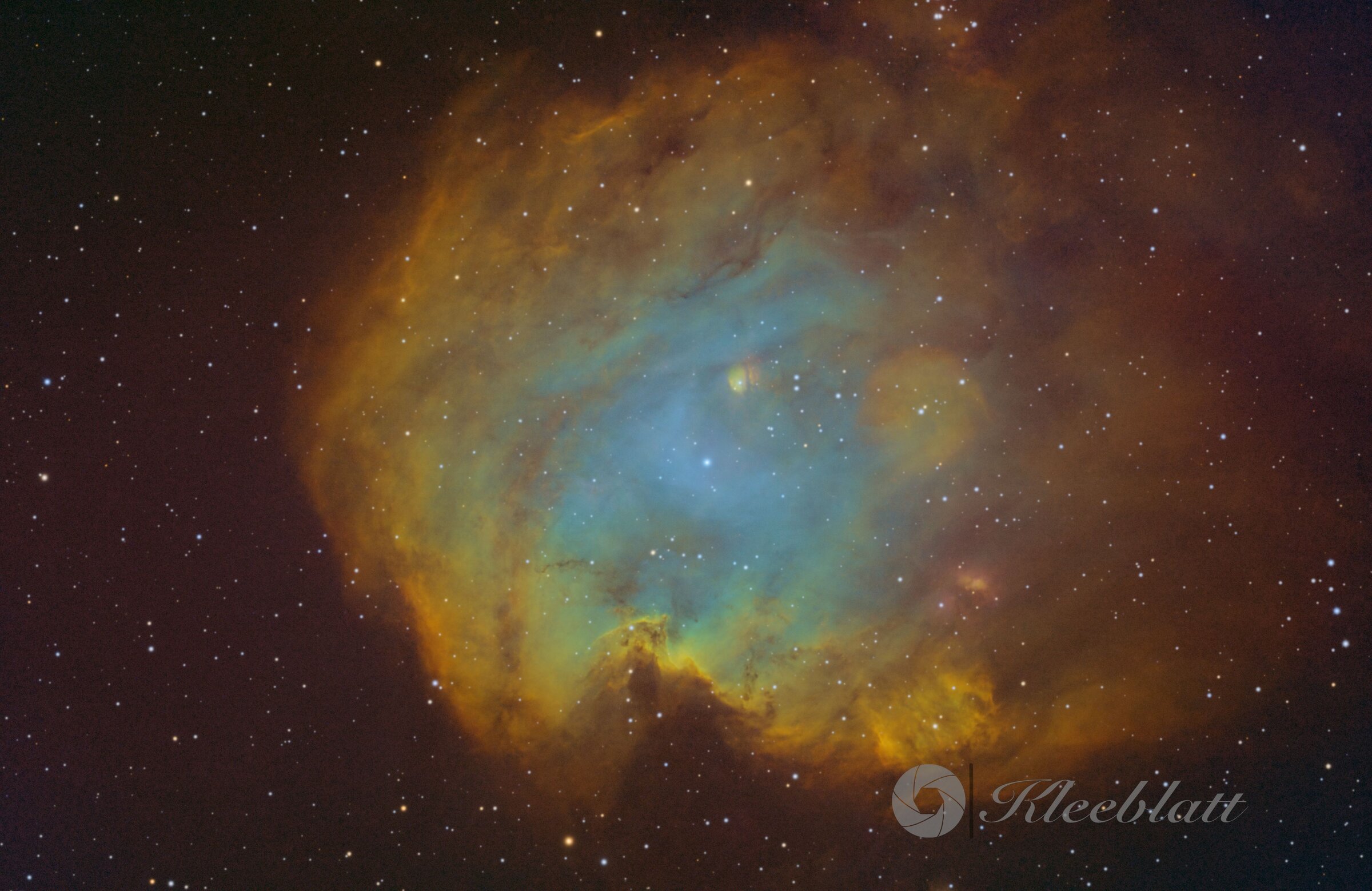
Das Ziel war NGC 2174, der Affenkopfnebel im Orion, nah an der Grenze zu den Zwillingen. In seiner Mitte steht HD 42088, ein sehr heißer Stern. Sein ultraviolettes Licht bringt das Gas ringsum zum Leuchten. Mit etwas Fantasie sieht man ein Affengesicht im Profil, das nach rechts schaut.
Zwei Nächte, drei Filter
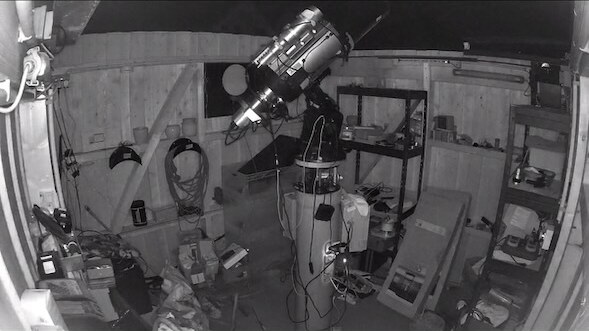
In der ersten Nacht, vom 22. auf den 23. November, habe ich mit dem L-Enhance angefangen, einem Filter, der Wasserstoff und Sauerstoff etwas breiter durchlässt: 30 Aufnahmen zu je vier Minuten. Danach ging es mit dem engeren L-eXtreme bis zur Morgendämmerung weiter, 70 Aufnahmen zu je fünf Minuten. In der zweiten Nacht war der Filter für Schwefel und Sauerstoff dran, 73 Aufnahmen zu je fünf Minuten. Zusammen sind das knapp 14 Stunden.
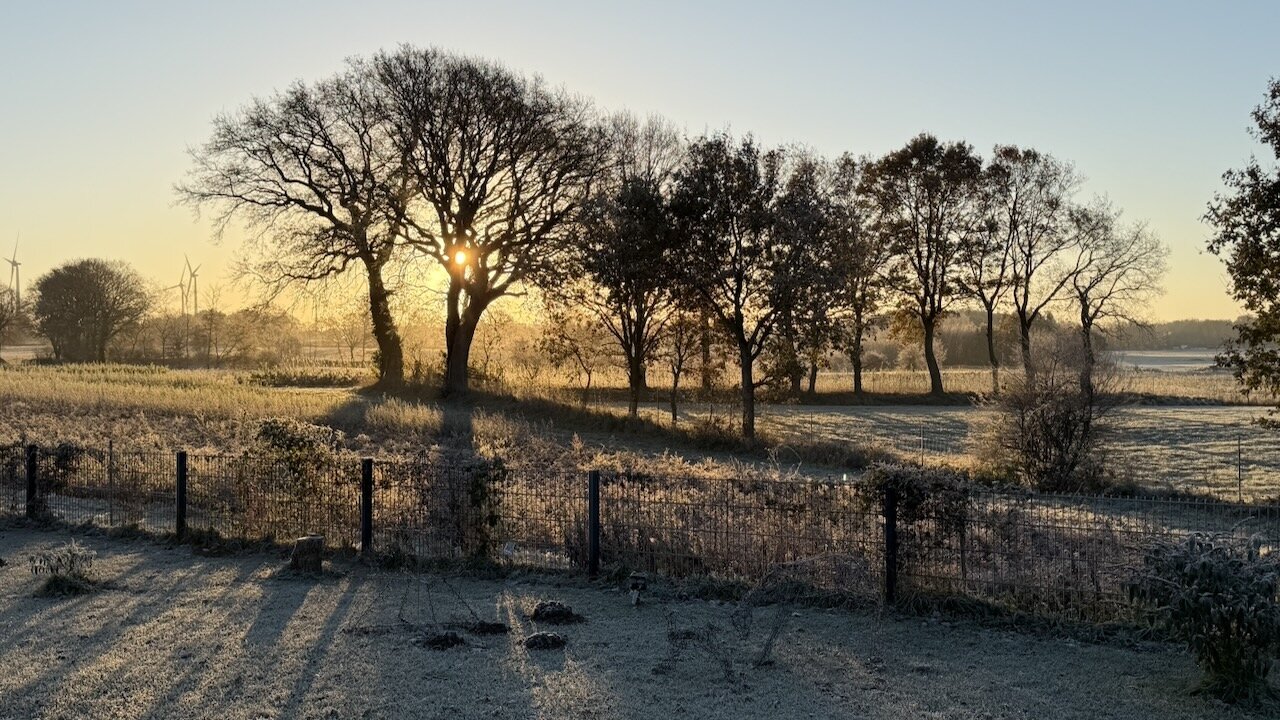
Kalt war es auch. In der zweiten Nacht hatten wir Frost, im Mittel minus 4,5 Grad bei fast völliger Windstille. Am Dienstagmorgen war alles weiß.
Die Hubble-Palette
Meine Kamera ist eine Farbkamera. Die Filter lassen jeweils zwei Linien gleichzeitig durch. Getrennt werden sie erst nachträglich über die roten, grünen und blauen Pixel der Kamera. Am Ende hatte ich drei Graustufenbilder: Schwefel, Wasserstoff und Sauerstoff.
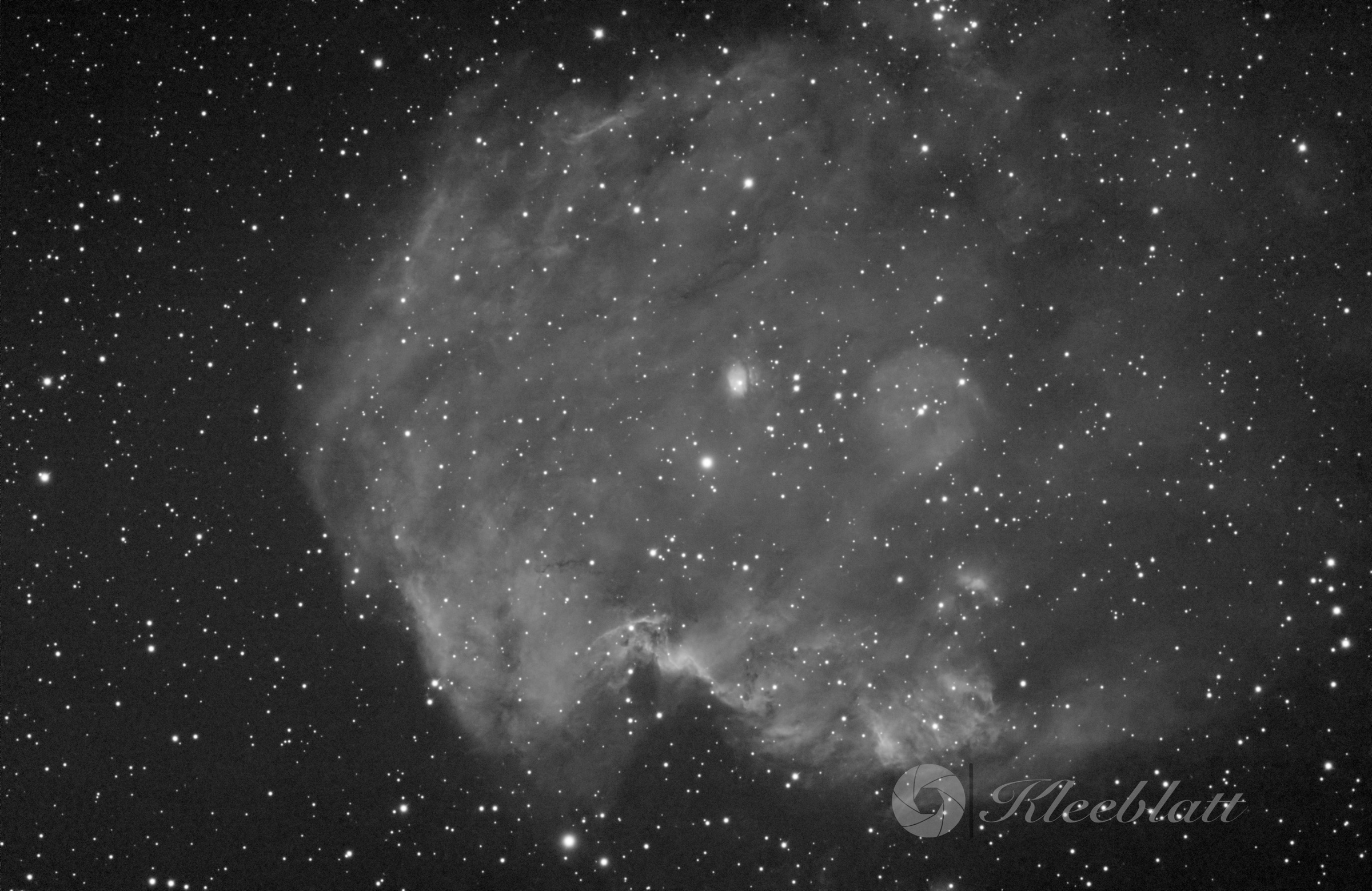
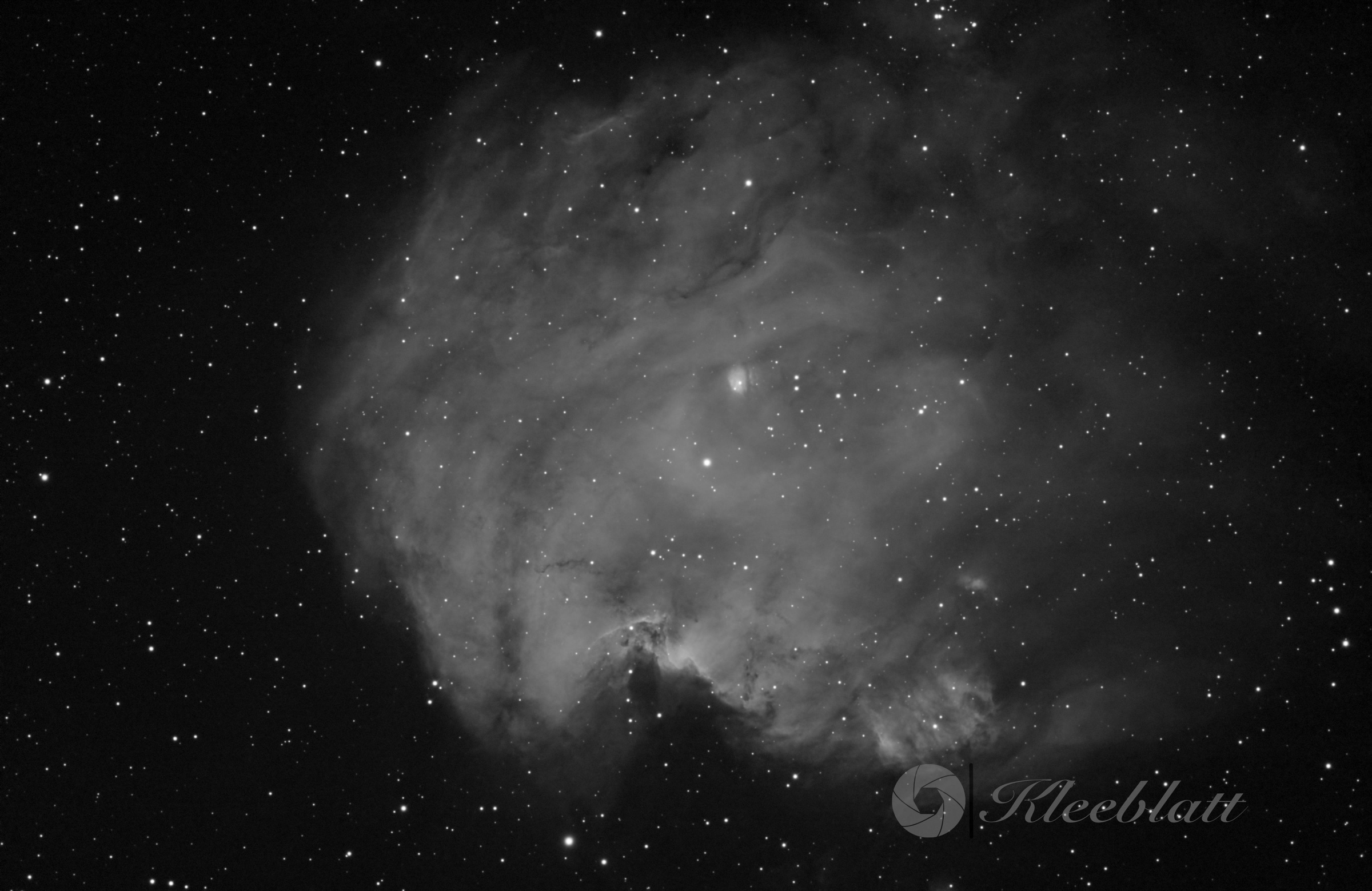
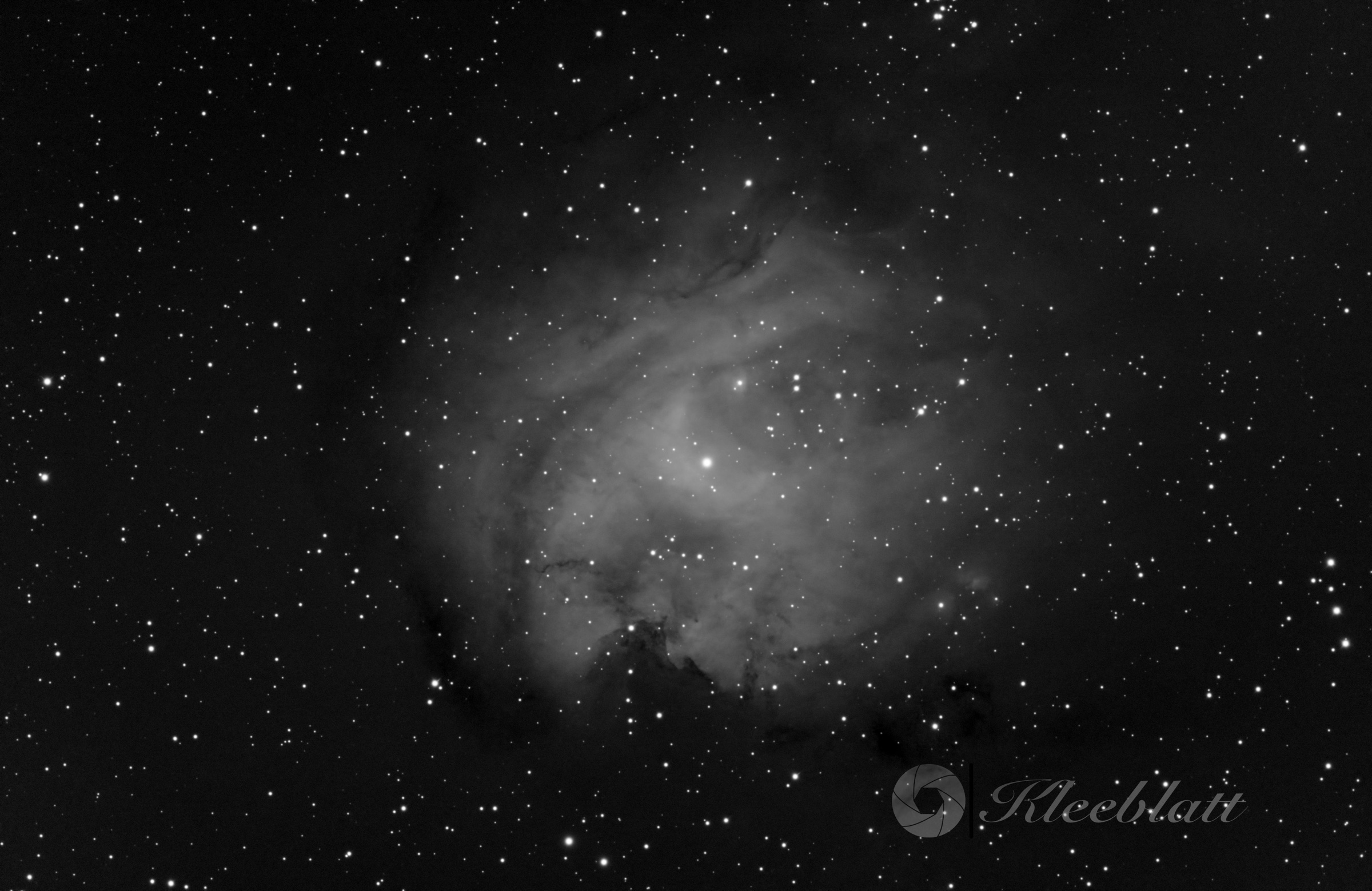
Schon in Schwarzweiß sieht man die Unterschiede. Wasserstoff zeigt den ganzen Nebel mit allen Filamenten. Schwefel betont die äußere Hülle, Sauerstoff füllt das Innere rund um den heißen Stern.
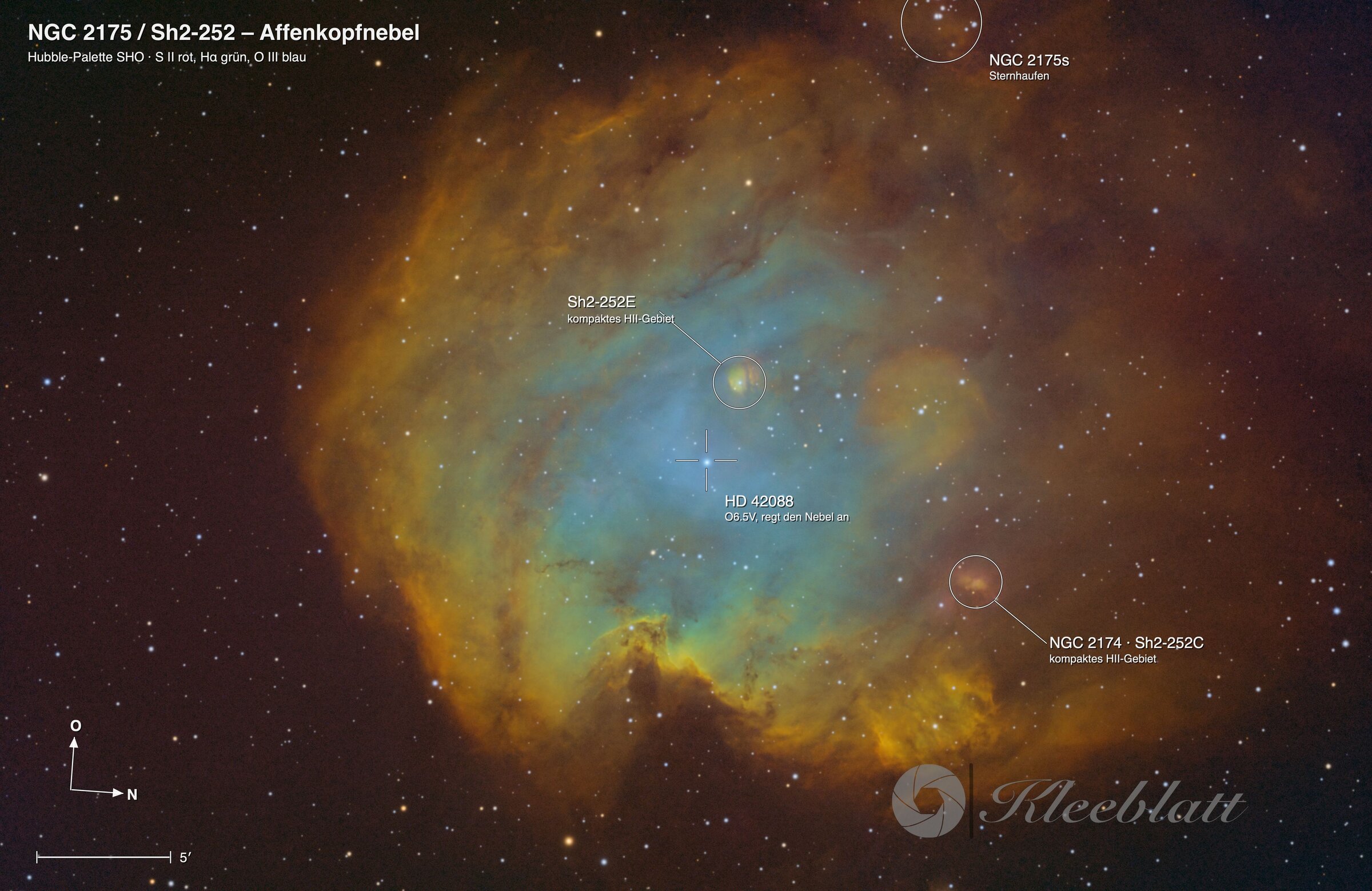
Daraus habe ich ein Farbbild in der sogenannten Hubble-Palette gebaut: Schwefel wird rot, Wasserstoff grün, Sauerstoff blau. Mit den echten Farben hat das wenig zu tun, denn Hα und S II sind beide rot und für das Auge kaum zu unterscheiden. Dafür sieht man, wo welches Element leuchtet. Gold und Orange am Rand, wo Schwefel und Wasserstoff zusammenkommen, Blau im Inneren rund um den heißen Stern, wo der Sauerstoff zum Leuchten gebracht wird.
Wasserstoff ist mit Abstand am hellsten. Den Schwefel musste ich etwa achtfach und den Sauerstoff gut vierfach verstärken, damit sie im Bild überhaupt mitreden. Die Sterne stammen aus den Aufnahmen mit dem L-Enhance. Dieser Filter lässt mehr vom Sternlicht durch, und die Sterne behalten ihre natürlichen Farben. In reinen Schmalbandbildern werden sie sonst gern rosa.
Knapp daneben ist auch vorbei
Beim Bearbeiten fiel mir mitten im Nebel ein kleiner gelber Fleck auf. Wie ein Bildfehler sah er nicht aus, und er war in beiden Nächten da. Einen Moment lang dachte ich, ich hätte etwas entdeckt.
Hatte ich nicht. Der Fleck heißt Sh2-252E und ist ein kleines, dichtes Gebiet, in dem ein eingebetteter Sternhaufen das Gas zum Leuchten bringt. Er steht längst in den Katalogen und ist auf anderen Aufnahmen des Affenkopfs ebenso zu sehen. In den Schwarzweißbildern oben leuchtet er in Wasserstoff und Schwefel, im Sauerstoff fehlt er fast ganz. Grün und Rot ergeben in der Palette Gelb, daher seine Farbe. Knapp daneben ist auch vorbei. Gefreut hat es mich trotzdem, dass er aus dem Garten so deutlich herauskommt.
In der beschrifteten Fassung habe ich ihn markiert, dazu den zweiten kompakten Knoten Sh2-252C, der in manchen Katalogen NGC 2174 heißt, und den Stern HD 42088.
Andere Farben
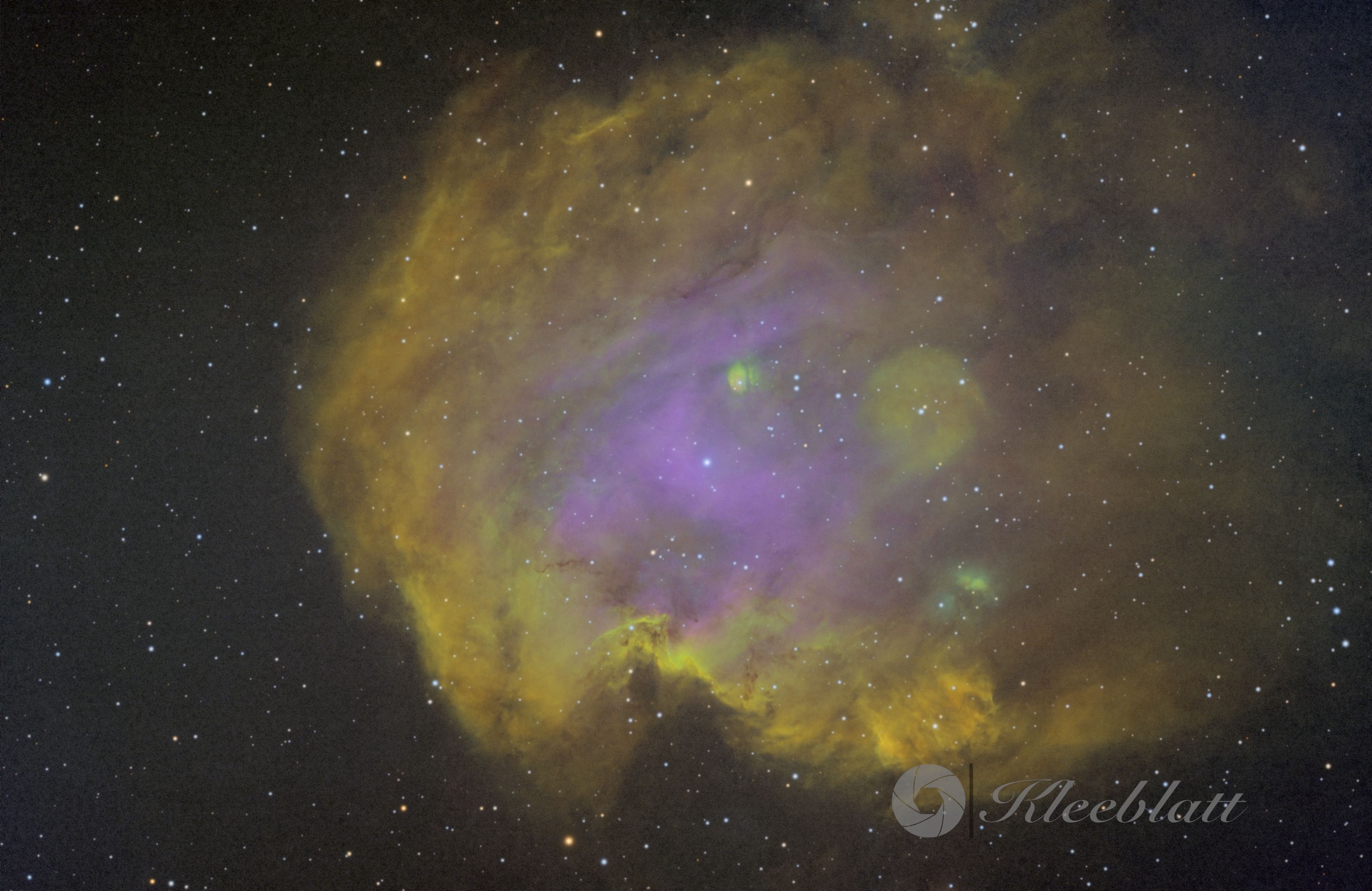
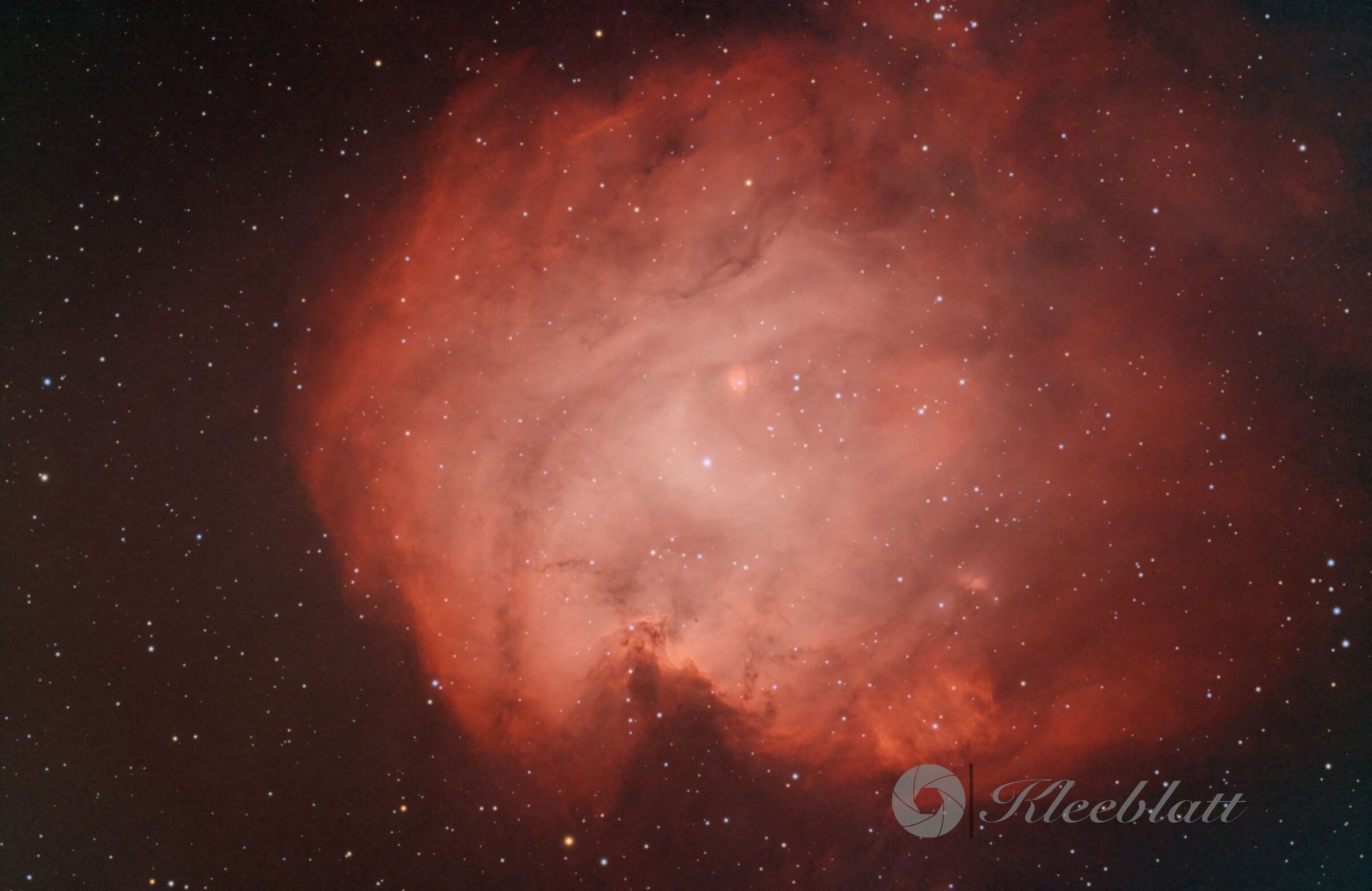
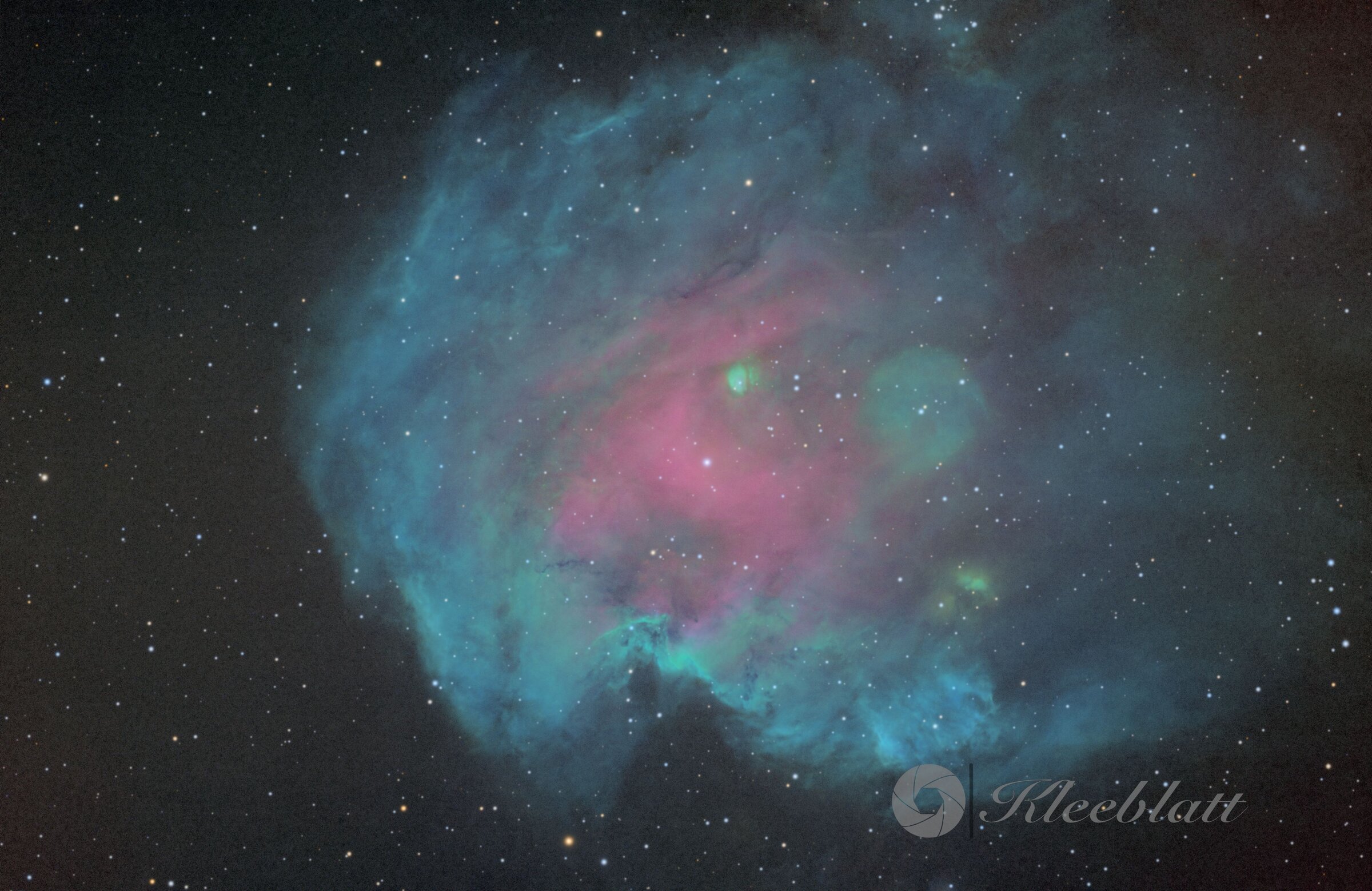
Aus denselben Daten lassen sich auch ganz andere Bilder bauen. Oben die HSO-Fassung mit Wasserstoff in Rot, Schwefel in Grün und Sauerstoff in Blau: Der Rand wird gelb, das Innere violett. Darunter links der Nebel in den Farben, die die Kamera ohne Umsortieren liefert. Fast alles ist rot, weil der Wasserstoff den Rest überstrahlt. Rechts die OSH-Palette mit Sauerstoff in Rot, Schwefel in Grün und Wasserstoff in Blau.
Aufnahmedaten
- Celestron C8 mit Starizona-Reducer, 1440 mm, f/7, auf einer Celestron CGX
- ZWO ASI071MC Pro, gekühlt auf −10 °C, Gain 100
- 22./23. November: 30 × 240 s L-Enhance, 70 × 300 s L-eXtreme
- 23./24. November: 73 × 300 s S II + O III
- Zusammen 13 h 55 min, verarbeitet in PixInsight
- Wetter 22./23. November: im Mittel −1,0 °C, 94 % Luftfeuchte, Wind 0,5 m/s, Mond zu 96 % beleuchtet
- Wetter 23./24. November: im Mittel −4,5 °C (tiefster Wert −6,0 °C), 99 % Luftfeuchte, windstill, Mond zu 99 % beleuchtet
- Wetterdaten von der eigenen Station, gemittelt über die astronomische Nacht
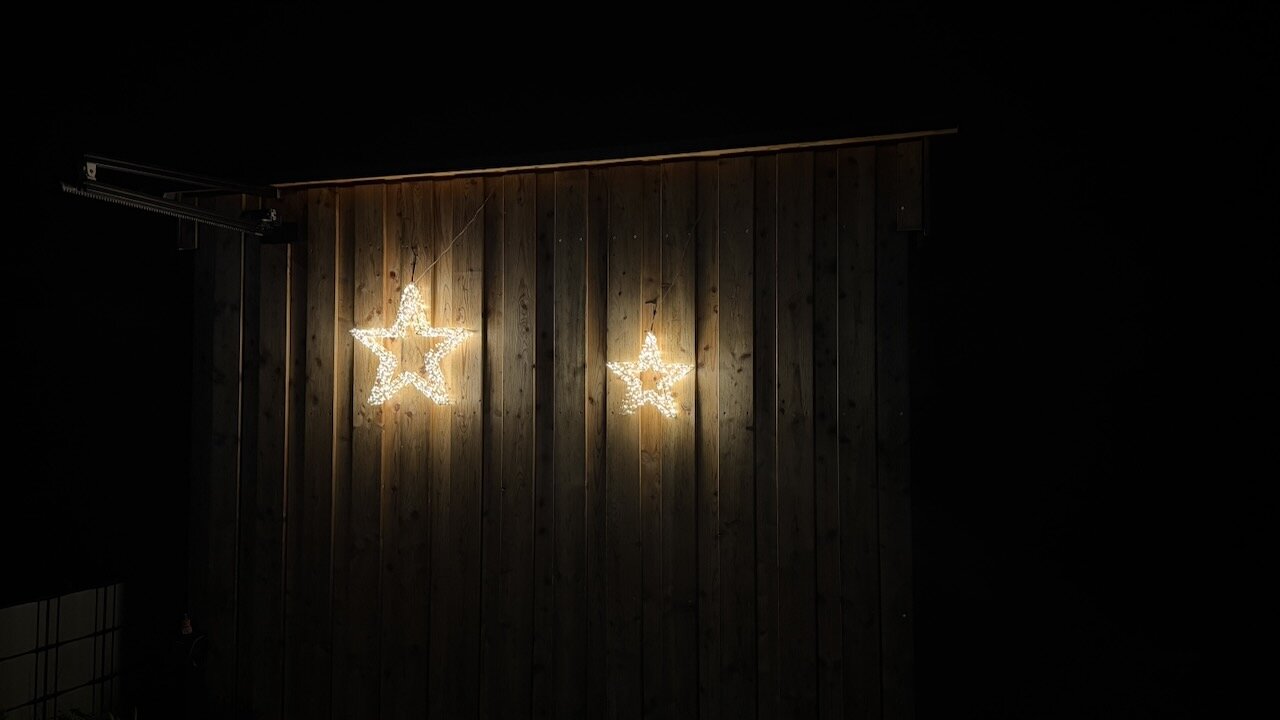
Wenn die Nächte jetzt wieder trüb werden: Ein paar Sterne gibt es im November auch an der Sternwarte.
Clear skies,
Marcus
Two nights at the Monkey Head
On Sunday morning there was frost on the lawn, fog over the meadows behind the garden and not a single cloud in the sky. Days like that are rare here in November. The night after stayed clear, and so did the next one.
Almost full moon
There was one catch: the moon. On the first night it was 96 percent illuminated, on the second 99 percent. This afternoon at 15:53 it is full, and it is a supermoon. The moon is especially close to Earth and correspondingly bright. For galaxies or faint dust clouds, nights like that are a write-off.
Emission nebulae still work. They glow only in a few very specific colours: hydrogen (Hα) deep red, sulphur (S II) red as well, oxygen (O III) blue-green. Moonlight, on the other hand, is reflected sunlight and spread over all colours. Narrowband filters let only those few lines through. Almost everything from the nebula arrives, only a small remainder from the moon.
The Monkey Head
The target was NGC 2174, the Monkey Head Nebula in Orion, close to the border with Gemini. At its centre sits HD 42088, a very hot star. Its ultraviolet light makes the surrounding gas glow. With a little imagination you can see a monkey's face in profile, looking to the right.
Two nights, three filters
On the first night, from 22 to 23 November, I started with the L-Enhance, a filter that passes hydrogen and oxygen in somewhat wider bands: 30 exposures of four minutes each. Then I carried on with the narrower L-eXtreme until dawn, 70 exposures of five minutes each. On the second night it was the turn of the filter for sulphur and oxygen, 73 exposures of five minutes each. Together that is almost 14 hours.
It was cold, too. On the second night we had frost, minus 4.5 degrees on average with almost no wind. On Tuesday morning everything was white.
The Hubble palette
My camera is a colour camera. The filters each pass two lines at the same time. They are only separated afterwards via the camera's red, green and blue pixels. In the end I had three greyscale images: sulphur, hydrogen and oxygen.
Even in black and white the differences show. Hydrogen shows the whole nebula with all its filaments. Sulphur emphasises the outer shell, oxygen fills the interior around the hot star.
From those I built a colour image in the so-called Hubble palette: sulphur becomes red, hydrogen green, oxygen blue. That has little to do with the real colours, since Hα and S II are both red and hard to tell apart by eye. What you do see is where each element glows. Gold and orange at the edge, where sulphur and hydrogen come together, blue inside around the hot star, where the oxygen is made to glow.
Hydrogen is by far the brightest. I had to boost sulphur about eightfold and oxygen a little over fourfold for them to have any say in the picture. The stars come from the L-Enhance exposures. That filter lets more starlight through, and the stars keep their natural colours. In pure narrowband images they otherwise tend to turn pink.
A near miss is still a miss
While processing I noticed a small yellow spot in the middle of the nebula. It did not look like an artefact, and it was there on both nights. For a moment I thought I had discovered something.
I had not. The spot is called Sh2-252E, a small, dense region where an embedded star cluster makes the gas glow. It has long been in the catalogues and shows up just as well on other images of the Monkey Head. In the black-and-white images above it glows in hydrogen and sulphur but is almost absent in oxygen. Green and red make yellow in the palette, hence its colour. A near miss is still a miss. I was pleased all the same that it comes out so clearly from the garden.
In the labelled version I have marked it, along with the second compact knot Sh2-252C, which some catalogues call NGC 2174, and the star HD 42088.
Other colours
The same data can be turned into quite different pictures. Above, the HSO version with hydrogen in red, sulphur in green and oxygen in blue: the edge turns yellow, the interior violet. Below on the left, the nebula in the colours the camera delivers without any reshuffling. Almost everything is red, because hydrogen outshines the rest. On the right the OSH palette with oxygen in red, sulphur in green and hydrogen in blue.
Capture details
- Celestron C8 with Starizona reducer, 1440 mm, f/7, on a Celestron CGX
- ZWO ASI071MC Pro, cooled to −10 °C, gain 100
- 22/23 November: 30 × 240 s L-Enhance, 70 × 300 s L-eXtreme
- 23/24 November: 73 × 300 s S II + O III
- 13 h 55 min in total, processed in PixInsight
- Weather 22/23 November: average −1.0 °C, 94 % humidity, wind 0.5 m/s, moon 96 % illuminated
- Weather 23/24 November: average −4.5 °C (lowest −6.0 °C), 99 % humidity, no wind, moon 99 % illuminated
- Weather data from my own station, averaged over the astronomical night
If the nights turn cloudy again now: there are a few stars on the observatory in November too.
Clear skies,
Marcus